
AUTHORS: Mary Frese and Juliet Bromer, Erikson Institute
June 2026
Policy Analysis
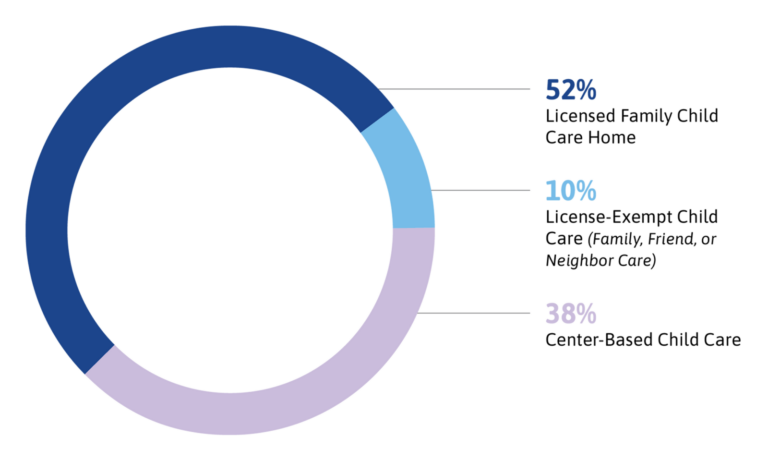
While child care use among families involved in state child welfare programs is documented, the types of child care arrangements used for children in foster care and their families are not widely known. Home-based child care (HBCC) is widely used in the state of California, accounting for 56% of publicly funded child care arrangementsi and may be a particularly good fit for children and families in state foster care systems due to low provider-to-child ratios, small group size, home-like environments, and individualized and responsive care that are common features of high-quality HBCC settings. Prior research suggests these features of HBCC may have the potential to support the unique needs (e.g., developmental delays, trauma) of children in foster care. This data snapshot is one in a series of state-level analyses on the prevalence of children in foster care who are also cared for in HBCC settings. This data snapshot examines the HBCC arrangements used by families receiving an emergency child care voucher through California’s Emergency Child Care Bridge Program during a specific 6-month period. All data reported in this brief come from CCB-18 Emergency Child Care for Foster Children Bridge Program Quarterly Reports for Fiscal Year 2025-26.